Cave Creek, AZ 85331
span widget
span widget

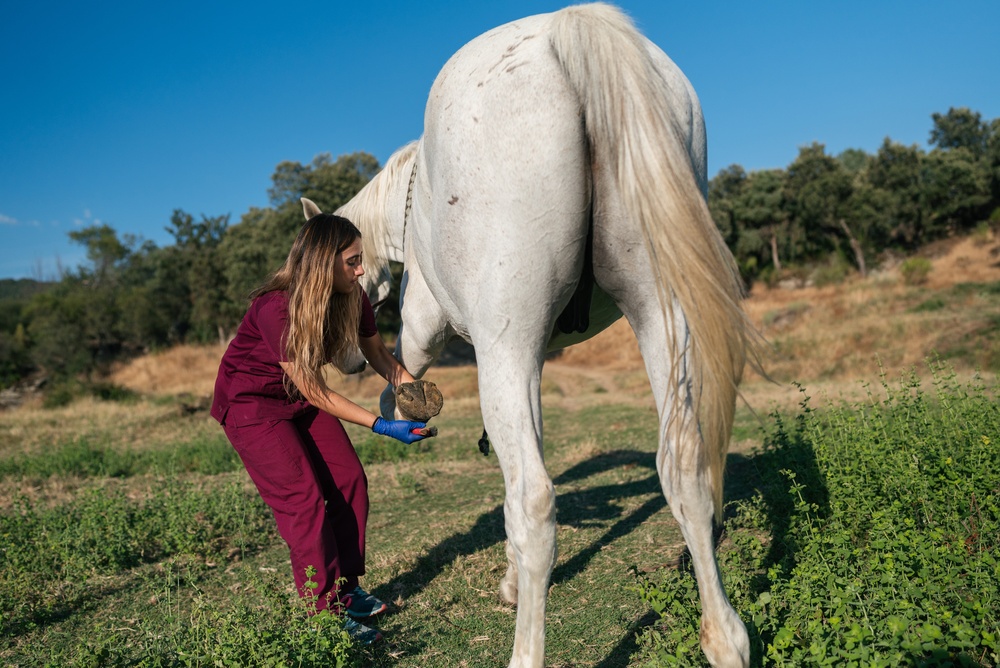
At Chaparral Veterinary Medical Center, we evaluate movement, joints, hooves, and supporting structures to determine where discomfort may be coming from and what diagnostic steps are appropriate.
Mild lameness is not always obvious. Some horses show only subtle changes in stride length, willingness to turn, lead changes, transitions, or performance. An evaluation before returning to heavier work can help us identify concerns early and create a plan based on the horse's activity level and findings.
Signs that may warrant an equine lameness evaluation include:
A lameness exam begins with a careful history and physical assessment. We want to know when the problem started, whether it changes with footing or workload, and what the rider or trainer has noticed.
For sport and performance horses, movement may be evaluated in hand, including at the walk and trot. Flexion tests can also help us determine whether stressing a particular joint or limb temporarily changes the horse's gait. Depending on the findings, additional localization techniques may be used to narrow down the source of discomfort.
Hoof pain can sometimes look like a joint, tendon, or ligament problem, which is why a systematic exam matters. We assess the hoof and lower limb for tenderness, balance concerns, swelling, heat, and other clues that may help localize pain.
If the exam points toward a joint or deeper structure, diagnostic imaging can provide more information. Our equine diagnostic capabilities include digital radiography, ultrasonography, and nuclear scintigraphy. These tools can help us evaluate bone, joints, soft tissues, and areas that may not be fully assessed through the physical exam alone.
Treatment depends on the structure involved, the severity of the issue, the horse's age, and the demands of its work. Some cases may benefit from rest, rehabilitation, shoeing changes, medication, or a gradual return-to-work plan. When appropriate, we also offer equine sports medicine and orthopedic options such as shockwave therapy, PRP, IRAP, stem cell therapy, and arthroscopy.
Our goal is to make the diagnosis as specific as possible so owners can make informed decisions about treatment, conditioning, and when it is appropriate to return to riding.
Schedule an equine lameness evaluation with Chaparral Veterinary Medical Center in Cave Creek, AZ by calling 480-595-8600.


…