Cave Creek, AZ 85331
span widget
span widget

As dogs get older, it is common for them to slow down a little. However, stiffness, difficulty standing, shorter walks, or hesitation to use stairs can also point to arthritis or other sources of chronic discomfort. For senior dogs in Cave Creek, mobility problems can become especially noticeable when age-related joint changes make everyday activities more difficult.
At Chaparral Veterinary Medical Center, we provide geriatric care and laser therapy as part of our small animal services. Our goal is to help identify what is affecting your dog's comfort and develop an appropriate plan for maintaining mobility and quality of life.
Canine arthritis develops when joints undergo degenerative changes over time. Some dogs show obvious limping, while others have much subtler changes. Because dogs cannot tell us when something hurts, owners may first notice changes in routine or behavior.
Signs worth discussing with our veterinary team include:
Difficulty getting up after resting
Stiffness after sleeping or long periods of inactivity
Reluctance to jump into the car or climb stairs
Shorter walks or less interest in playing
Limping or favoring one leg
These changes should not automatically be dismissed as normal aging. A veterinary evaluation can help determine whether arthritis, an orthopedic problem, or another medical condition is contributing to your dog's reduced mobility.
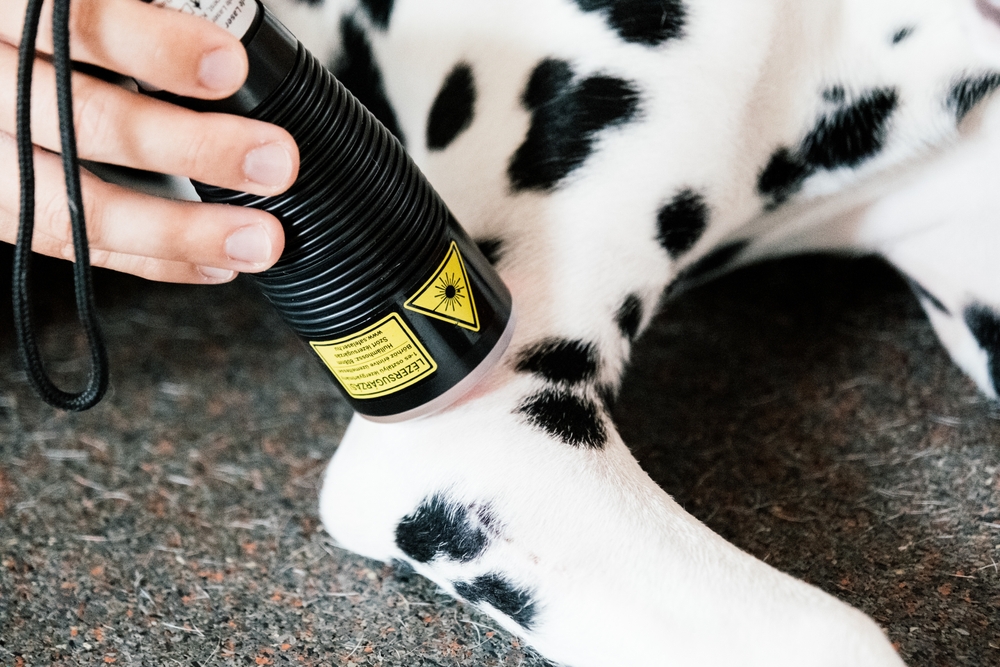
Veterinary laser therapy uses targeted light energy as a non-invasive treatment intended to support the body's natural healing processes. It may be incorporated into a treatment plan for certain painful or inflammatory conditions, including arthritis.
For some older dogs, laser therapy may help reduce discomfort and inflammation while supporting improved mobility. Treatments do not require surgery or injections, which can make laser therapy a useful option for selected senior pets.
The appropriate number and frequency of treatments depend on the dog's condition, overall health, and response to therapy. We evaluate each patient individually rather than using the same approach for every dog.
Laser therapy may be one component of a broader arthritis management plan. Depending on what we find during an examination, recommendations may also involve weight management, controlled exercise, medications, changes to daily activity, or other supportive care.
Maintaining a healthy body weight is particularly important for dogs with arthritis because excess weight places additional stress on already uncomfortable joints. Consistent, low-impact activity can also help maintain muscle strength and prevent unnecessary loss of mobility.
Here in Cave Creek, pet owners should also consider the desert environment when exercising an older dog. Walks during cooler parts of the day and appropriately paced activity can help senior dogs remain active without placing unnecessary strain on their bodies.
You do not need to wait until your dog is struggling significantly to discuss mobility changes with us. Early evaluation gives us an opportunity to identify developing problems and determine whether treatments such as laser therapy could be appropriate.
Even small changes - taking longer to stand, stopping during walks, or no longer jumping onto a favorite piece of furniture - can provide useful information about your dog's comfort.
If your older dog is showing signs of arthritis, stiffness, or reduced mobility, contact Chaparral Veterinary Medical Center in Cave Creek, AZ at 480-595-8600. Our team at 32100 N. Cave Creek Rd., Cave Creek, AZ 85331 can evaluate your dog and discuss whether laser therapy and other supportive options may help keep them comfortable and active.



…